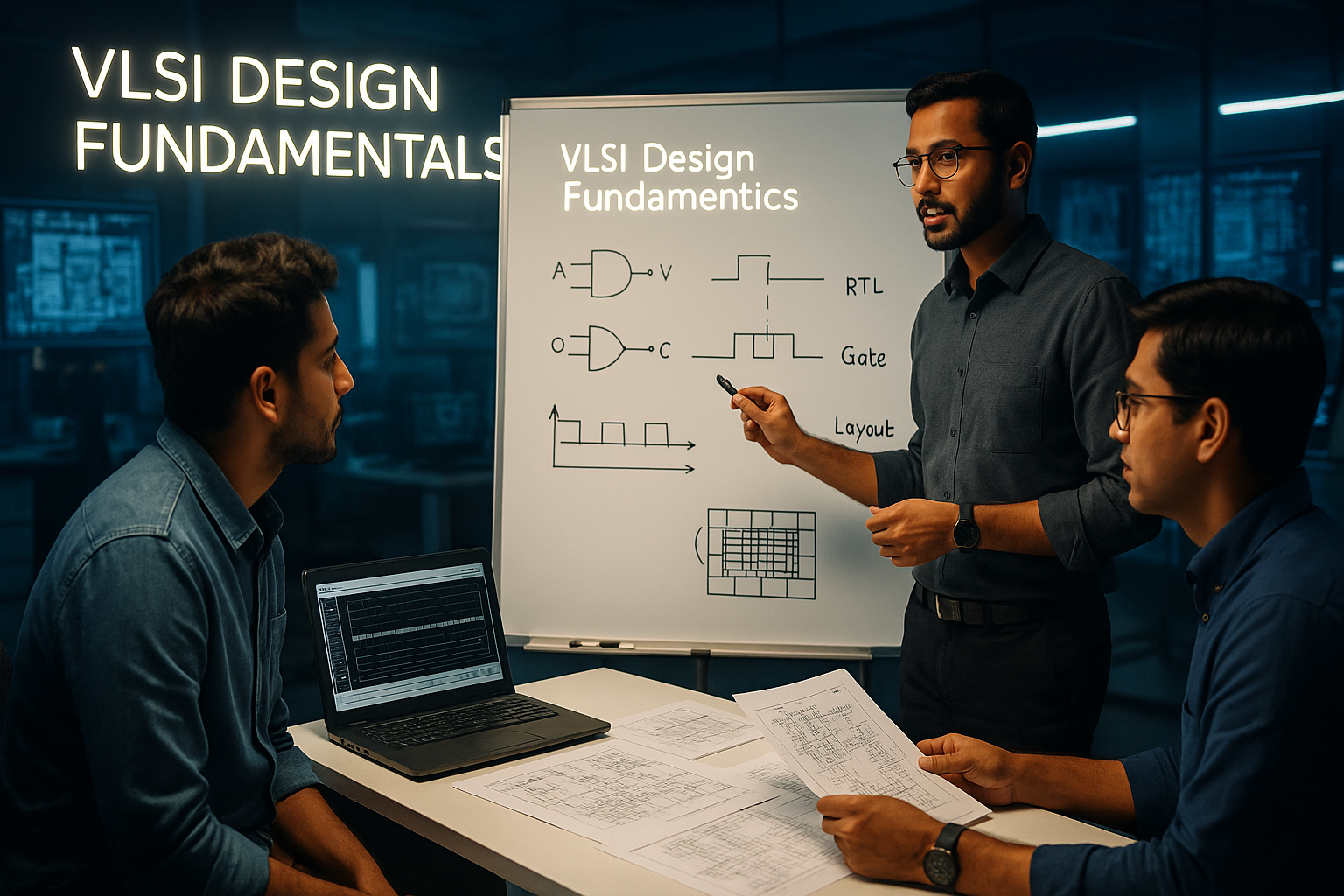


Video: Embedded Systems Course Overview
6 Months










The VLSI Projects & Protocols program helped me turn theoretical learning into real, demonstrable skills. I worked on a UART protocol design project, starting from RTL design to verification and synthesis. The mentors guided me patiently and explained every step of the process, from timing constraints to simulation analysis. The focus on documentation and presentation made it feel like an actual company project. Today, I proudly showcase this project on my resume, and it has helped me stand out in interviews.
I always wanted to understand how communication protocols are implemented in hardware, and this course gave me that clarity. We worked on I2C and SPI protocol design projects and analyzed them using waveform viewers. The instructors explained not just how to code, but why specific design decisions are made. The project review sessions were conducted like technical meetings, which prepared me for real-world work culture. I gained both confidence and technical depth through this training.
The VLSI Projects & Protocols course was extremely hands-on. Each student was assigned an individual project related to standard design protocols. I got to design an AXI-lite interface, which gave me a strong foundation in digital communication concepts. The mentors reviewed every block and helped me correct my code efficiently. This kind of detailed one-on-one mentoring is rare, and it helped me become confident in facing technical interviews later.
This course turned out to be one of the most valuable experiences in my learning journey. The instructors made sure every project followed proper industrial flow — from specification to RTL, synthesis, and verification. I particularly liked the documentation review sessions that taught us how to prepare professional reports. The practical exposure I got through this course made me realize how VLSI engineers manage real protocols inside chips. It’s the perfect blend of learning and doing.
As a final-year engineering student, I wanted to build a meaningful project to showcase in my placements. The VLSI Projects & Protocols program gave me exactly that opportunity. I implemented an SPI controller using Verilog and learned debugging techniques using simulation tools. The course helped me understand protocol-level design challenges and timing issues in real chips. The end-to-end guidance from experts made this project one of my proudest achievements. I’m now fully confident about my technical interviews.