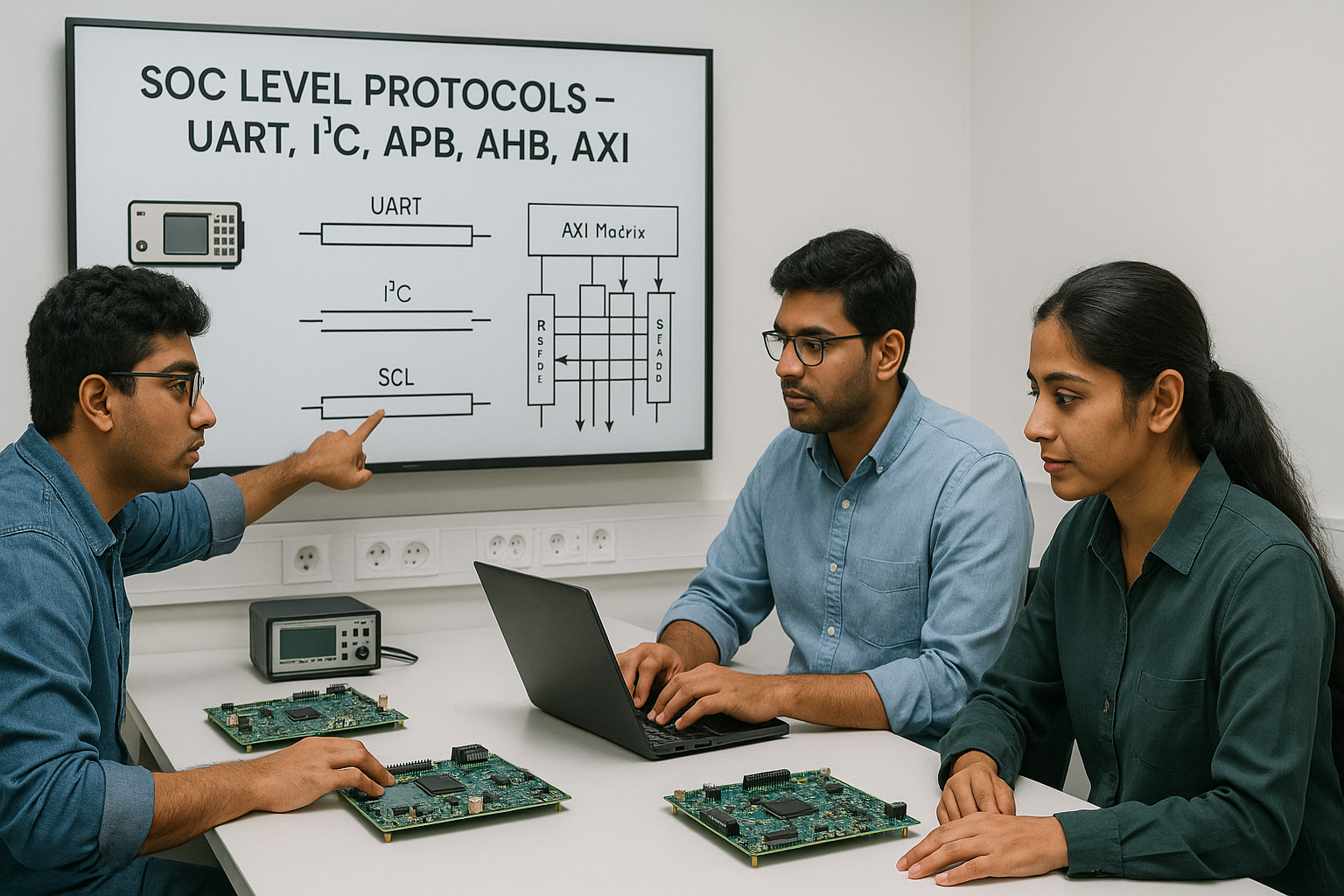


Video: Embedded Systems Course Overview
6 Months









I enrolled in the SOC Design & Verification (Debugging Techniques) program, and it helped me take my verification skills to the next level. The course went deep into waveform analysis, functional debug methods, and error tracing in large designs. The mentors explained every concept with clarity and linked theory to practical debugging scenarios. Working on 3 real projects helped me understand how to manage simulation failures and timing issues effectively. The recorded sessions were also useful for revision. This course is ideal for anyone who already knows UVM and wants to master real chip-level debug flows.
The Quantum Computing course was a refreshing and futuristic learning experience. The topics were well-organized, starting from qubits and gates to algorithms like Grover’s and Shor’s. I appreciated how the instructor used Python-based simulators to demonstrate complex quantum principles. The assignments challenged us to think logically and mathematically. Even though it’s a tough subject, the 8-week duration was perfectly paced for understanding each topic. By the end, I could actually implement basic quantum circuits confidently.
I took the VLSI & AI/ML course and found it truly unique. It bridged the gap between semiconductor design and artificial intelligence beautifully. We explored how ML models can optimize power and timing in chip design. The projects were very interesting — especially one where we predicted circuit delays using regression models. The mentors had deep knowledge of both domains and guided us patiently. After completing this 16-week program, I now understand how AI-driven automation is shaping the future of VLSI.
The Embedded Systems course was perfectly structured for both beginners and those with some microcontroller background. I learned to program and interface various sensors, and the 4 projects gave me practical hands-on experience. Each module was clear and focused, covering RTOS, communication protocols, and debugging. The instructors were highly supportive and always open to clarifying doubts. I particularly liked how they connected concepts with real-world applications like IoT and robotics. It’s a must-join for anyone who wants to move from coding to full system design.
I joined the VLSI & AI/ML batch after completing a basic VLSI program, and it completely changed my perspective. The course demonstrated how AI models can accelerate verification and DRC closure. The blend of design data analysis and Python-based ML scripts made learning very exciting. The mentors shared real industry use-cases from physical design and EDA automation. Each session had lab practice that improved my technical confidence. This program truly made me industry-ready for hybrid design roles combining AI and VLSI.
I can confidently say this course turned my theoretical knowledge into real, applied understanding. The Career Launch Pad [Pro VLSI] gave me a sense of how the semiconductor industry actually works. The lab sessions were intense but rewarding — from Verilog coding to simulation and synthesis, everything felt hands-on. The mentors were extremely approachable and gave me detailed feedback after every assignment. Within months, I felt confident to apply for core design roles, something I couldn’t have imagined earlier.
I joined this course right after graduation, and it gave me a huge advantage over my peers. The faculty didn’t just cover the syllabus; they connected every topic to current industry practices. The small batch size meant I could interact directly with mentors and clarify doubts instantly. The mock technical interviews were especially useful, as they replicated the kind of questions real companies ask. I genuinely believe this course laid the foundation for my career in VLSI.
Pro VLSI Launch Pad provided a clear structure and mentorship that guided me through every phase of learning. From RTL design to physical verification, every topic was taught with utmost detail. The trainers ensured we understood not just the “how” but the “why” behind each concept. I also appreciate the placement guidance, resume preparation tips, and mock sessions that boosted my confidence. I’d recommend this course to anyone starting their VLSI journey.
Joining the Career Launch Pad [Pro VLSI] was one of my best academic decisions. I loved how interactive and concept-driven the sessions were. The instructors were always ready to clear doubts and offered career advice based on real industry scenarios. Each project gave me hands-on exposure to RTL coding, testbench writing, and waveform debugging. The overall experience not only strengthened my technical base but also helped me get shortlisted for multiple interviews. It’s a truly complete beginner-to-industry program.